Newsletter
AI-ready MarkdownIASER Dispatch: Issue 002
Sent to subscribers on August 25, 2026. Subscribe to get the next one, or browse all issues.
Assalamu alaikum,
Welcome to IASER Dispatch #002: research, developments, and questions shaping AI and Muslim life.
This month, we’re looking at a practical question at the center of IASER’s work: How do we help ensure AI has a positive impact on Muslim users and communities?
We’re sharing a tool you can use today, new findings from JaleesBench, a result from an open-weight model, and a question about how young people are already interacting with AI.
Can AI Have a Positive Islamic Impact?
A Tested Framework for Muslim AI Users
AI systems now shape how people learn, search, make decisions, and engage with questions about faith and everyday life.
The question isn’t whether AI should imitate a human relationship. What we really want to know is: can the way we design and use AI lead to better outcomes for Muslim users?
We condensed the guided framing behind JaleesBench into a short set of instructions you can add to your AI assistant.
Available in English, Arabic, Urdu, and Indonesian.
We tested the shorter version across 1,692 conversations. It performed nearly as well as the full framing.
Get the Framework + See Results →
An Open Model Shows What’s Possible
We tested Thinking Machines Lab’s Inkling using JaleesBench.
Out of the box: +0.25
With IASER’s guided framing: +0.91
That is the highest ceiling we’ve measured on this model set.
But the more important point may be what comes next. Because Inkling is open-weight, improvements do not have to remain at the prompting layer.
Researchers and developers can explore building that better behavior into the model itself.
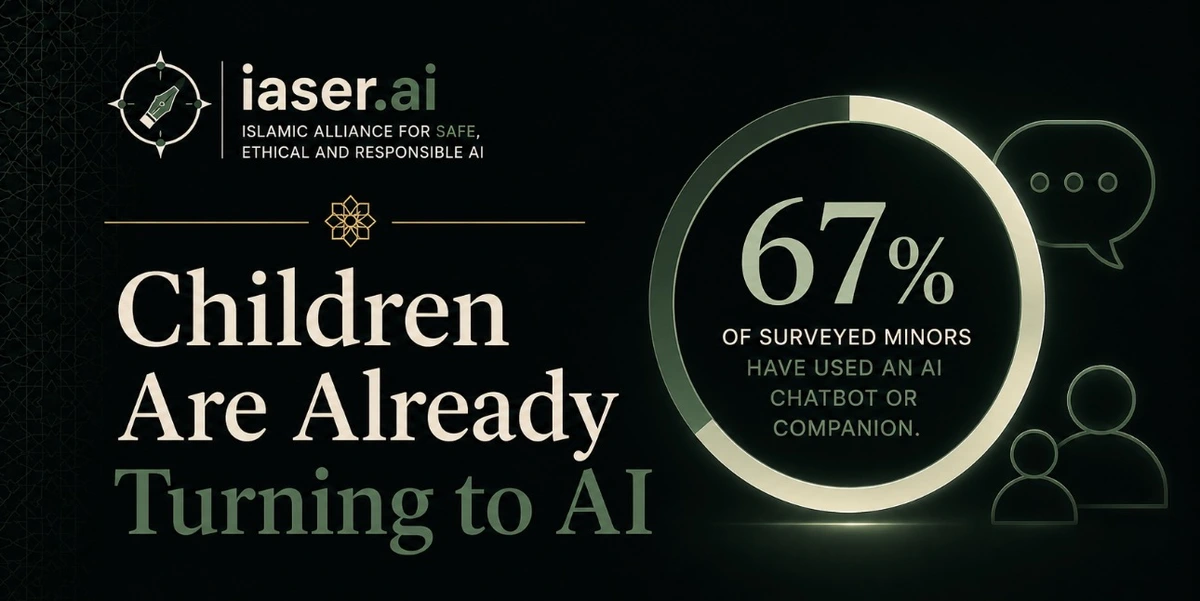
Young People Are Already Turning to AI
Thorn’s latest youth safety research raises an important question about the impact AI systems are already having on young people.
When young people bring difficult experiences or deeply personal questions to AI before bringing them to adults, what kind of impact is that interaction having?
Are AI systems helping users reach healthier, safer, and more constructive outcomes, or are they reinforcing behaviors and assumptions that may cause harm?
That makes the quality and impact of AI interactions more than a theoretical research question.
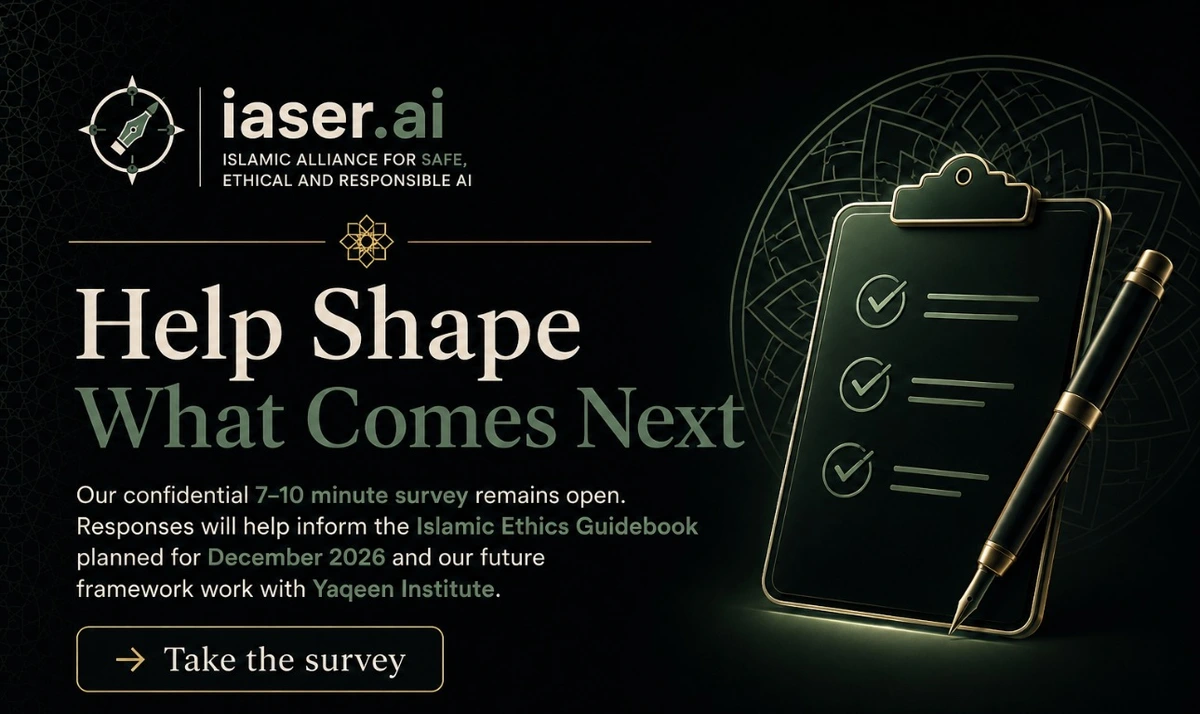
Help Shape What Comes Next
If you are a Muslim working in tech, our confidential 7–10 minute survey remains open until August 27.
Responses will help inform the Islamic Ethics Guidebook planned for December 2026 and our future framework work with Yaqeen Institute.
Know a Muslim nonprofit already using AI? Disagree with our findings? Want to help with outreach, events, fundraising, research, or operations?
We want to hear from you: [email protected]
Wassalamu alaikum, IASER Steering Committee
Special thanks to the IASER Dispatch team: Alexandra, Arbaz, Bara and Farah.